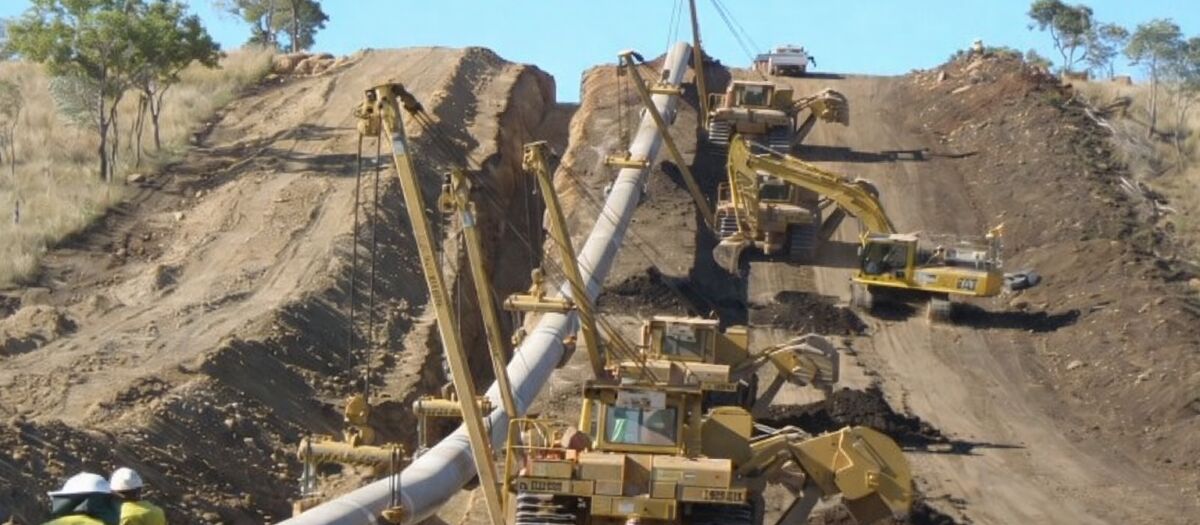
In pipeline project implementation, success is not defined by the final weld alone. It is the outcome of years of disciplined planning, where multidisciplinary activities converge into precise execution. From early study phases through detailed engineering, all elements; engineering design, environmental and regulatory permitting, land access, contracting, and procurement, must align seamlessly under uncompromising safety standards.
Whether transporting crude oil, natural gas, water, or slurry for mining operations, the fundamental processes remain consistent. Every project, from initial concept through construction and full commissioning, demands a structured, methodical approach to ensure long-term integrity, reliability, and safe operation.
At PJ Inc., we believe we’re not just building pipelines; we’re delivering safe, reliable, and sustainable infrastructure that meets strict regulatory requirements, overcomes environmental challenges, and performs flawlessly for decades. To show how this is achieved, let’s walk through the pipeline construction process, step by step, from planning to commissioning.
1. Feasibility Studies & Early Planning
Every successful pipeline project begins with a clear understanding of whether it is technically, economically, and environmentally viable. Permitting and land acquisition strategies must be identified at an early stage, as these processes often take years to secure legal access and can drive the overall project schedule.
During the feasibility stage, engineers assess potential routes, balancing efficiency with the need to avoid sensitive habitats, unstable terrain, other geohazards, and heavily populated areas. Trade-off studies are necessary to evaluate and document that the optimal designs are selected to move forward. They determine the required capacity, operating pressures, and material specifications, while also commissioning environmental impact assessments to evaluate any potential disruption to ecosystems.
Equally important is early engagement with stakeholders, communities, and regulatory bodies. At PJ Inc., we prioritize this dialogue from the start, as addressing concerns upfront not only builds trust but also helps projects move more smoothly through the permitting process.
2. Engineering Design & Permitting
Once feasibility is established, the project advances into detailed engineering. This phase transforms concepts into fully engineered designs, including material selection, detailed route optimization using advanced survey and geotechnical data, and hydraulic analysis to ensure stable, efficient, and reliable operation under all anticipated conditions.
Safety is embedded into the design philosophy from the outset. Systems such as leak detection, emergency shutdown valves, pressure relief and control systems, and bypass arrangements are incorporated to manage operational risks and protect people, assets, and the environment.
In parallel, environmental and regulatory permitting is progressed. Depending on project scope and location, approvals may be required from multiple authorities, particularly for cross-border pipelines or routes passing through environmentally or socially sensitive areas. Land access and acquisition planning forms a critical part of this phase and must be closely integrated with engineering and execution planning.
PJ Inc.’s experience in managing authority approvals and permitting interfaces ensures regulatory compliance at every stage and significantly reduces the risk of schedule delays.
3. Permitting & Land Acquisition
Securing legal access to land is a critical and often schedule-driving activity. Land acquisition planning includes identification of land types, cadastral requirements, land ownership, valuations, and applicable legal frameworks. Negotiations, agreements, easements, and statutory notifications must be carefully managed and coordinated with engineering and construction planning.
As the project transitions into construction, the interface and handover of permitting and land access management to the construction contractor becomes critical. The Owner must continue to monitor compliance while avoiding interference with the contractor’s contractual responsibilities. Poorly managed interfaces at this stage can lead to claims, delays, and cost escalation.
PJ Inc.’s experience in managing authority approvals and land acquisition ensures compliance at every step, secures timely access to site, and significantly reduces the risk of delays and claims during construction.
4. Contracts & Procurement
In the early stages of a project, preparation of a robust contract management plan is essential. This plan must clearly define contracting strategies, risk allocation, payment mechanisms, and contract administration procedures.
Following approval of engineering designs, focus shifts to procurement of materials, equipment, and services. Early identification and active management of long-lead items (LLIs) is critical to ensure availability of key materials and equipment, avoiding construction stoppages and associated cost and schedule impacts.
Procurement is not merely a purchasing exercise. Suppliers must be rigorously evaluated to confirm compliance with technical specifications, quality requirements, and safety standards. Pipes, fittings, valves, and other critical components are subject to inspection and verification prior to shipment to ensure full compliance with project requirements.
Equally important is the careful pre-qualification of construction contractors. Only contractors with demonstrated experience in the specific type of pipeline work should be invited to tender, ensuring that bids are technically robust and execution risks are minimized.
Contracts must be prepared and evaluated with a clear focus on claims avoidance. It is strongly recommended that the Owner’s project and contract management teams undertake claims-avoidance and contract-administration training prior to contract award. Experience shows that many pipeline construction contracts experience time and cost overruns that could have been avoided through robust contract preparation, well-defined payment mechanisms, clear risk allocation, and disciplined procurement planning. Shortcuts taken during this phase are a leading cause of disputes, delays, and cost escalation.
5. Health and Safety
The health and safety (H&S) of all stakeholders on a pipeline project is non-negotiable and must take precedence over schedule and cost considerations. In addition to standard H&S management plans, procedures, and site controls, effective safety performance requires active leadership, oversight, and continuous engagement at all levels of the project.
Following the award of the construction contract, it is recommended that a dedicated Safety Review Board be established, comprising the project sponsor and senior management representatives from each participating organization. This forum provides structured oversight of safety performance, implementation of safety initiatives, and alignment of expectations across the project. Safety statistics, leading and lagging indicators, and individual incidents should be formally reviewed on a monthly basis. This enables early identification of adverse trends, systemic weaknesses, or emerging risks before they escalate into serious incidents or major accidents.
The objective is to move beyond reactive compliance and to manage safety proactively through informed decision-making, continuous improvement, and visible leadership commitment.
6. Quality Assurance and Quality Control: An Owner Responsibility
In pipeline projects, the Owner must define and implement their own Quality Management System and should not rely solely on the construction contractor for quality assurance and quality control. While contractors are responsible for executing the work, the Owner remains accountable for the pipeline throughout its operating life, often 20 years or more, long after the contractor’s liability has expired.
An Owner-led quality system ensures that requirements are clearly defined, risks are managed, and records are reliable for the full life of the asset. Without this oversight, defects introduced during design or construction may only become apparent years later, exposing the Owner to integrity, safety, and financial risk.
From a quality assurance perspective, contractors should be required to submit their Quality Plans, Quality Manual, and procedures for Owner approval before work begins. The Owner should then participate in contractor audits and conduct independent audits to verify that approved systems are being properly implemented. Inspection and Test Plans with defined hold points are essential to maintain control at critical stages.
For quality control, the Owner should deploy an independent, qualified QC oversight team alongside the contractor’s inspectors to ensure work in the field meets project requirements.
This approach is consistent with ISO 9001 principles, which place ultimate accountability for quality, risk-based thinking, and control of externally provided processes with the organization responsible for the asset.
In the pipeline industry, there is a saying: in pipelining we bury our mistakes. Strong quality assurance, independent quality control, and active Owner oversight are essential to ensure that mistakes are identified before they are buried. Doing it right the first time is not only good engineering practice—it saves money.
7. Pre-Construction
Pre-construction preparations are critical to the safe and efficient execution of any pipeline project. The contractor’s health and safety management plans and procedures are non-negotiable, with comprehensive inductions and training of all project personnel treated as a priority from the outset.
Most projects require the establishment of construction camps to accommodate client and contractor personnel, together with upgrades to existing access roads and the construction of fit-for-purpose access tracks to ensure the safe movement of people, materials, and equipment.
Delivery of pipe and other long-lead items typically occurs or partially occur prior to the commencement of construction. Pipe yards and warehousing facilities must therefore be established early to enable controlled receipt, inspection, quality verification, and preservation of materials until they are required on site. These early activities ensure that construction can proceed in an efficient, and uninterrupted manner.
Following contract award, the owner’s and contractor’s project management teams must be fully mobilized. A clearly defined construction engineering phase is required prior to site mobilization, during which the contractor develops detailed construction methodologies, work sequencing, logistics plans, and temporary works designs. All management plans, procedures, and method statements must be prepared, reviewed, and approved before mobilization. Commencing construction without adequate field engineering and approved execution plans presents a significant risk to safety, schedule, cost, and quality.
Effective integration of the contractor’s health and safety, field engineering, environmental and social compliance, grievance management, land access, quality, and construction management functions is essential. These teams must operate as a coordinated unit to ensure legal access to site, compliance with permit conditions, and the safe execution of works from the outset.
8. Construction
The construction stage is where engineering and planning are translated into physical infrastructure. Construction may only commence once key construction processes have been pre-qualified (e.g. field bending, welding, NDT, etc) and specialized crews have been trained and certified, and legal access to site secured with notifications given.
It is essential that health and safety, environmental, land access, social performance, and quality assurance and control representatives are mobilized on site prior to the commencement of any construction activities. These functions must be fully operational to ensure compliance with permit conditions, contractual requirements, and applicable regulations. Inspection and testing plans must be clearly defined, with mandatory hold points established to ensure owner verification at critical stages.
Efficient pipeline construction relies on disciplined planning and tight control of construction spreads. Crew spacing between front-end activities (right-of-way preparation, stringing, welding) and back-end activities (coating, lowering-in, backfilling, reinstatement) must be clearly defined and strictly managed. Any relaxation of spacing should only occur under controlled conditions, with agreed mitigation measures and clearly defined cost and schedule impacts.
Contractors often prioritize activities that generate early cash flow, such as right-of-way preparation. If not properly controlled, this approach can stretch owner oversight resources and compromise effective monitoring of safety, quality, environmental, and social commitments. Excessive crew dispersion makes verification of payment quantities difficult and can push work fronts beyond reasonable travel distances from camps, typically exceeding one hour which introduces additional safety risks and reduces overall construction efficiency.
Access roads and pipeline rights-of-way must be maintained throughout the construction period until each pipeline section is formally completed and handed back to the Owner. Following completion, these areas are typically reinstated and restored to their original or agreed post-construction condition, in accordance with permit and landowner requirements.
For a conventional pipeline project, the core construction activities generally follow a consistent sequence, including surveying, clearing and grading, right-of-way preparation, stringing, bending, welding, non-destructive testing, trenching, bedding, lowering-in, tie-ins, padding, backfilling, hydrostatic testing, reinstatement, restoration, completion, and handover. While this sequence is broadly common, each project presents unique challenges that require tailored execution strategies.
Terrain and environmental conditions significantly influence construction methodologies. Pipelines constructed in mountainous or steep terrain differ markedly from those installed across flat plains. In addition, every pipeline includes special crossings and critical locations, such as rivers, roads, railways, steep slopes, or environmentally sensitive areas that require dedicated designs and installation methods. These special points often demand separate construction spreads or “mini-spreads” to execute the work safely, efficiently, and in compliance with technical and environmental requirements.
9. Pipeline Integrity Testing and Baseline Definition
Throughout construction, pipelines undergo systematic testing focused on activities that present the highest risk to long-term integrity. This includes non-destructive testing (NDT) of every weld, holiday testing of external coatings and internal linings, pre-hydrotesting of special crossings and critical pipe strings, and hydrostatic testing of completed pipeline sections once installed.
Before a pipeline can be placed into service, it must be tested under conditions that demonstrate safe and reliable performance. Hydrostatic testing—filling the pipeline with water and pressurizing it above normal operating pressure—is the most common method. Immediately prior to hydrostatic testing, the pipeline section should be cleaned using an aluminum caliper plate or an electronic caliper tool to identify dents and ovalities that must be repaired before testing. This process minimizes the number of “golden welds” left in the pipeline once hydrostatic testing is complete.
Intelligent inspection tools, commonly referred to as smart pigs, are often run through the pipeline to establish a baseline condition. These inspections verify internal geometry, identify construction-related defects, and confirm cleanliness. All test and inspection results are documented to form a permanent pipeline integrity baseline, supporting regulatory compliance, future inspections, and long-term maintenance planning.
These testing and baselining activities are typically performed in accordance with recognized industry standards such as ASME B31, API, and ISO pipeline integrity and testing requirements.
10. Mechanical Completion
The completion verification process may be referred to by different names depending on the Owner’s standards and terminology; however, the underlying objective remains the same. The construction contractor must formally demonstrate that the works have been completed in full compliance with project requirements.
This is achieved through a structured completion process that typically includes defined checklists, inspection and test records, punch lists, and formal completion certificates. These tools provide objective evidence that all contractual, technical, quality, and safety requirements have been met.
Final documentation, including completion dossiers, must be progressively compiled and handed over to the Owner as completion activities occur, not deferred until the end of the project. Progressive handover enables timely review, early identification of deficiencies, and more effective closeout.
Owners should consider retaining a portion of the performance bond or contract payments until completion documentation requirements are fully satisfied. The Owner must work with the Contractor to validate the information received to confirm its accuracy, completeness, and long-term usability as part of the pipeline’s permanent operational and integrity records.
11. Commissioning & Operational Readiness
Planning for commissioning and operational readiness must be established well in advance of project completion. These activities should be fully integrated into the overall project execution plan to ensure a controlled and safe transition from construction to operation.
Commissioning marks the transition from mechanical completion to operational service, but it is far more than a final checklist exercise. The pipeline system is systematically tested using water and/or product to confirm that design intent and performance guarantees are met under controlled conditions.
As part of commissioning, the pipeline is flushed and cleaned, control and automation systems, such as SCADA, are calibrated, alarms and interlocks are tested, and remote monitoring systems are verified as fully functional. Operator training is conducted in parallel, ensuring that operating personnel are competent and prepared to manage the system safely and effectively from day one.
The commissioning process concludes with the formal handover of the pipeline system to the Owner for operation, supported by complete documentation and confirmed operational readiness. Release of the construction contractor’s performance bond typically occurs following the expiry of the defects liability period, which is often two years after the contractor has been formally released from construction responsibilities.
12. Beyond Commissioning: Long-Term Integrity
While commissioning brings the construction project to a close, it also marks the beginning of the pipeline’s operational life. Long-term integrity management is essential, encompassing regular inspections, predictive maintenance, and environmental monitoring. At PJ Inc., we offer ongoing support to ensure that our pipelines remain safe, efficient, and compliant throughout their entire lifespan.
Excellence at Every Stage
From the first route selection through to the moment the first product flows, successful pipeline project execution is the result of precisely coordinated stages, each building on the last. At PJ Inc., our approach combines deep technical expertise with an uncompromising commitment to safety, environmental stewardship, and regulatory compliance. The outcome is pipeline infrastructure that not only meets today’s operational requirements but is designed and delivered to perform reliably for decades.
Please contact PJ Inc. to discuss how we can support your pipeline projects.